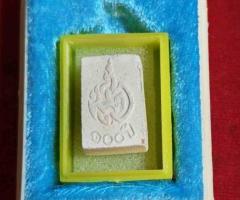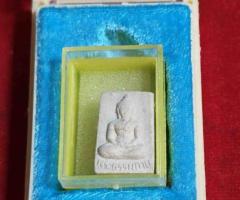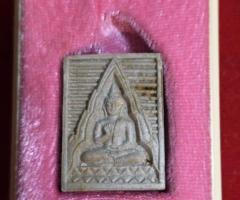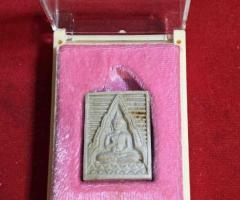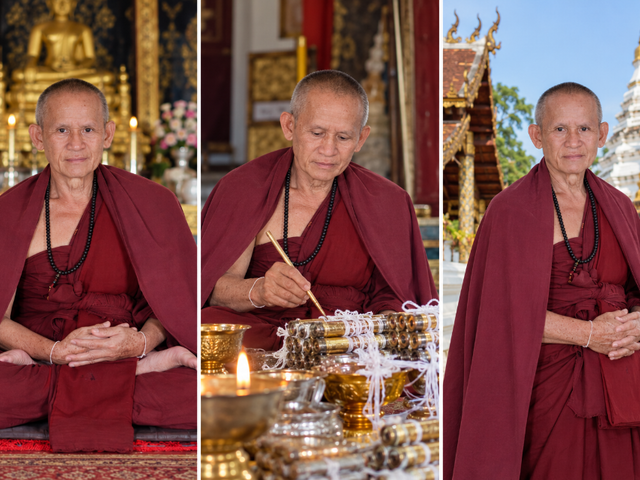
Temple: Wat Sri Don Moon (วัดศรีดอนมูล)
Location: Saraphi District, Chiang Mai, Thailand
Born: 10 February 1951 (B.E. 2494)
Birth Name: Prasit Kongkham (ประสิทธิ์ กองคำ)
Ordained as Monk: 3 May 1971 (B.E. 2514)
Monastic Name: Tejapanyo (เตชปญฺโญ)
Early Life and Introduction to Buddhism
Kruba Noi Tejapanyo is a highly respected Buddhist monk and spiritual master of Northern Thailand, widely recognised for his dedication to Buddhist teachings, meditation and the preservation of traditional Lanna sacred knowledge.
Born on 10 February 1951 in Ban Sri Don Moon, Chiang Mai, Kruba Noi developed a strong interest in Buddhism from an early age.
At just seven years old, he entered Wat Sri Don Moon under the guidance of Kruba Phad (ครูบาผัด), a respected monk renowned for his knowledge of Buddhist teachings, traditional herbal medicine, sacred inscriptions and protective talismans.
Under Kruba Phad's guidance, young Kruba Noi began studying Buddhist scriptures, Lanna writing, meditation practices and traditional sacred knowledge.
Ordination and Spiritual Education
At the age of 13, Kruba Noi was ordained as a novice monk in 1964. He continued his religious education and eventually received full monastic ordination on 3 May 1971.
He was given the monastic name Tejapanyo, meaning One Whose Wisdom Is His Strength.
Throughout his monastic life, Kruba Noi sought knowledge from several respected Northern Thai Buddhist masters, including:
Kruba Phad of Wat Sri Don Moon, Chiang Mai
Kruba Phromma of Wat Phra Phutthabat Tak Pha, Lamphun
Kruba Chaiyawongsa Pattana of Wat Phra Phutthabat Huai Tom, Lamphun
Kruba La Ta Thip of Wat Pa Tueng, Chiang Mai
Through these teachings, he developed extensive knowledge of Buddhist meditation, traditional Lanna spiritual practices and sacred talismanic inscriptions.
Master of Lanna Sacred Talismans
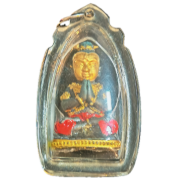
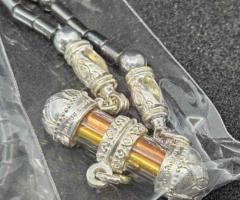
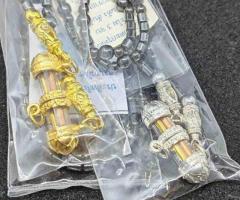
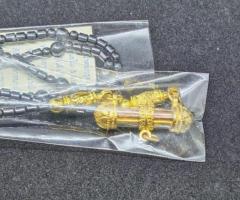
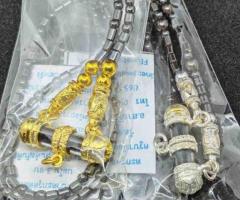
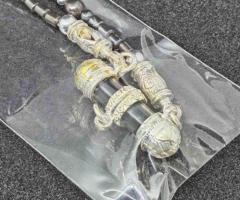
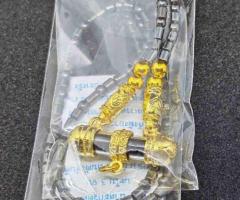
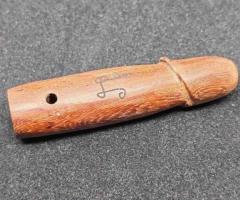
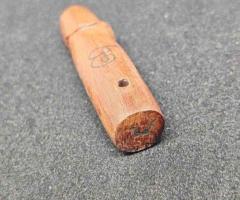
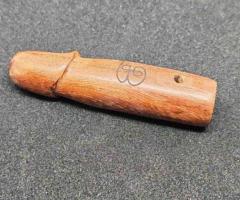
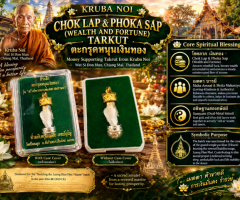
Kruba Noi is especially recognised among Thai amulet collectors for his association with traditional Lanna protective talismans, particularly the Takrut Ka Satorn (ตะกรุดกาสะท้อน).
This sacred takrut tradition was passed down through his teacher, Kruba Phad, who was renowned for protective inscriptions and traditional Lanna spiritual practices.
According to traditional beliefs, Takrut Ka Satorn is associated with:
Protection against harmful influences and negative intentions
Reflecting spiritual attacks and misfortune
Safeguarding the wearer from danger
Encouraging confidence and peace of mind
Providing spiritual reassurance in everyday life
These qualities are based on traditional spiritual beliefs passed down through generations of Lanna practitioners.
Meditation and Spiritual Discipline
Beyond his reputation for sacred talismans, Kruba Noi is highly respected for his commitment to Buddhist meditation and spiritual discipline.
One of his most recognised religious practices is Nirodha Kamma (นิโรธกรรม), an intensive period of secluded meditation and strict spiritual practice.
His retreats have attracted considerable attention from Buddhist devotees, many of whom gather at Wat Sri Don Moon to make merit and receive blessings following the completion of his meditation practice.
His dedication to meditation, religious education and the preservation of Lanna traditions has contributed to his standing as an influential Buddhist master in Northern Thailand.
Legacy and Spiritual Significance
Kruba Noi Tejapanyo represents an important continuation of Northern Thailand's Lanna Buddhist heritage.
Through his devotion to Buddhist teachings, meditation and traditional sacred knowledge, he has helped preserve practices passed down by earlier generations of respected monks.
For devotees and amulet collectors, his name is particularly associated with the protective traditions of Takrut Ka Satorn, reflecting the enduring spiritual heritage of Wat Sri Don Moon.
His life and teachings continue to inspire respect for Buddhist discipline, compassion, wisdom and the preservation of traditional Lanna culture.